“We See the Speck in Another’s Eye”: Russia Calls on the UN to Investigate Violations of Indigenous Peoples’ Rights in the West, While Ignoring the Situation at Home


At the 63rd session of the UN Human Rights Council in Geneva, UN Special Rapporteur on the rights of Indigenous Peoples Albert Barume presented a thematic report on the sexual and reproductive health and rights of Indigenous women and girls.
The report examines the impact of the colonial legacy and continuing forms of discrimination on Indigenous women and girls, including violations of their reproductive rights. The issues addressed include forced sterilization and contraception, violence, limited access to healthcare, and other consequences of historical and contemporary state policies.
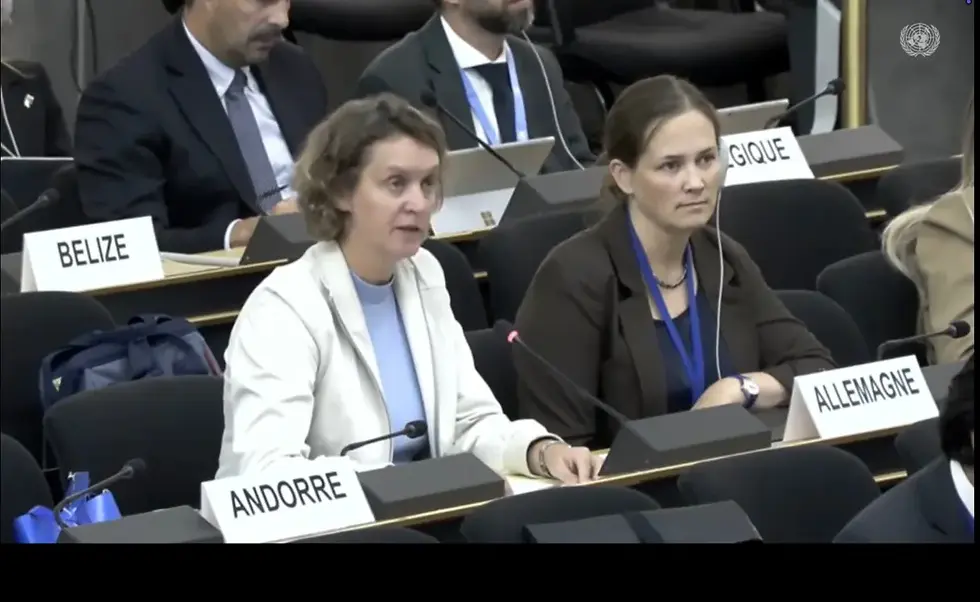
During an interactive dialogue with Barume, Russian Federation representative Aysa Mukafenova focused her statement on violations of the rights of Indigenous women in European countries, the United States, Canada, and Greenland.
“We agree that the most devastating impact on Indigenous Peoples was caused by the colonial policies of a number of European countries, the United States, and Canada. Its consequences are still being felt, and not only in the areas of healthcare and the psychological and social well-being of Indigenous Peoples,” Mukafenova said.
She referred to reproductive control, the forced removal of children, disappearances, and killings of Indigenous women and girls in the United States and Canada. The Russian representative also specifically addressed the information in Barume’s report concerning violations of the reproductive rights of Inuit women in Greenland.
“The report presents horrifying consequences of the Danish authorities’ policy of forced sterilization of the Inuit female population in Greenland. The list of countries whose colonial rule has led to long-term consequences could be expanded,” she said.
The Russian delegation called on the Special Rapporteur to “maintain its attention to this issue” and asked whether he intended to continue his research by expanding its geographical scope and the areas covered in studying the consequences of the colonial past.
At the same time, the situation of Indigenous women in Russia itself was not addressed in the statement by the Russian representative.
The issue, however, is already being considered by another UN treaty body. In September, four human rights organizations submitted to the UN Committee on the Elimination of Discrimination against Women (CEDAW) a parallel report on the situation of Indigenous women belonging to the Indigenous small-numbered peoples of the North, Siberia and the Far East of Russia. The document was prepared by the International Committee of Indigenous Peoples of Russia (ICIPR), Anti-Discrimination Centre Memorial, the Institute for Ecology and Action Anthropology (INFOE), and North Women.
The report’s authors raise issues including the persecution of women human rights defenders, the situation of Indigenous communities amid war and mobilization, access to traditional lands and resources, the impact of extractive industries and climate change, healthcare, education, and women’s participation in decision-making. Particular attention is given to the criminal prosecution of Indigenous rights defenders Daria Egereva and Natalia Leongardt.
Thus, the discussion at the UN Human Rights Council was specifically devoted to the rights of Indigenous women and girls. The Russian delegation used the discussion to draw attention to violations in other countries and the consequences of Western colonial policies, while not mentioning the problems faced by Indigenous women in Russia that have already been brought before UN mechanisms.
In conclusion, Mukafenova called on Barume to base his reports on “verified information from states” and stated that the Special Rapporteur had previously ignored official information provided by the Russian side when preparing his report for the 81st session of the UN General Assembly.


Comments