Germany Raises Concern at UN Human Rights Council Over the Persecution of Daria Egereva and Natalia Leongardt

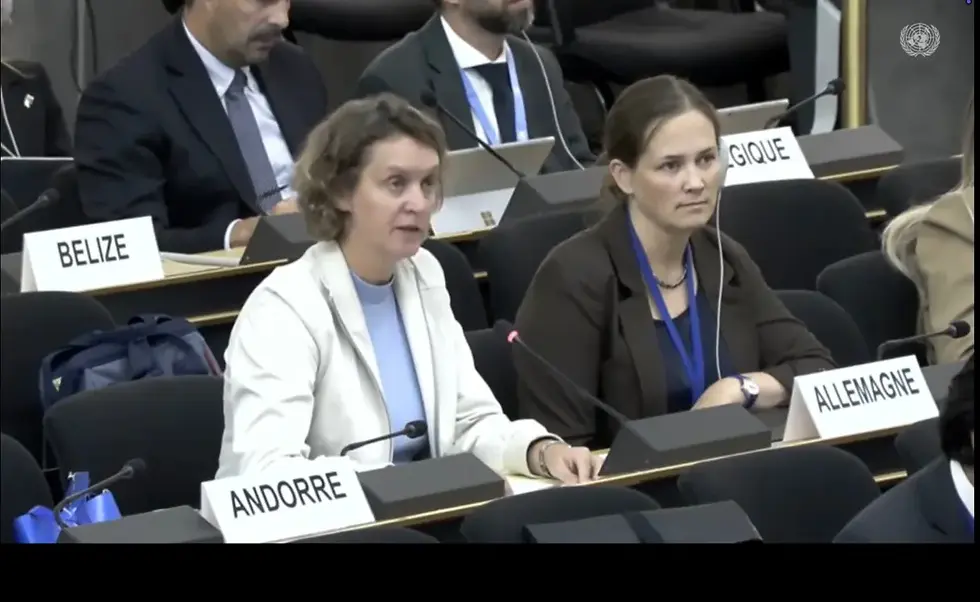
At the 63rd session of the UN Human Rights Council in Geneva, German representative Nikola Gillhoff spoke during a discussion of the UN Secretary-General’s report on intimidation and reprisals against individuals cooperating with the United Nations.
Germany joined the European Union statement and drew attention to increasing pressure on human rights defenders, including transnational repression and persecution for cooperation with UN mechanisms.
“Human rights defenders are facing increasing pressure. In countries such as Russia, China, and Iran, repression has become almost total. In addition, states are increasingly repressing human rights defenders beyond their own borders. Even here in Geneva, human rights defenders are being monitored and intimidated for speaking out against human rights violations,” the German representative said.
Particular attention was given to specific human rights defenders, including Daria Egereva and Natalia Leongardt, Indigenous rights defenders currently detained in Russia.
“Germany expresses its utmost concern about the numerous cases of persecution of human rights defenders documented in the report and beyond. They include Daria Egereva and Natalia Leongardt — prominent defenders of Indigenous Peoples’ rights, arbitrarily detained and criminally prosecuted by Russia.”
Germany also strongly condemned all forms of reprisals against human rights defenders, including transnational repression and retaliation for cooperation with the UN, stressing that without the participation of civil society, the United Nations cannot effectively carry out its work.
At the end of her statement, Nikola Gillhoff asked the UN representative about the most effective international mechanisms for protecting individual human rights defenders facing reprisals and ensuring accountability for such actions.
Germany’s statement is particularly significant for the cases of Egereva and Leongardt: their names were directly mentioned by a member state of the UN Human Rights Council during an official discussion on reprisals against people cooperating with the United Nations.

Against this background, the statement by Russian representative Vyacheslav Tolmachev stood in marked contrast. He said he was speaking on behalf of Russia’s Human Rights Commissioner, Yana Lantratova.
Tolmachev stated that Russia is consistently developing its “own national model of human rights protection” and argued that the international human rights agenda is “often used as a tool to promote double standards.”
“Such an approach undermines trust in international mechanisms and prevents equal dialogue,” the Russian representative said.
He also said that Russia’s Human Rights Commissioner was ready to develop cooperation with the UN and foreign counterparts “on the basis of respect and equal partnership” and called for engagement “without politicization and pressure.”
Thus, during the same discussion, the German representative directly raised the persecution of Daria Egereva and Natalia Leongardt and reprisals against human rights defenders cooperating with the UN, while the Russian representative focused his statement on criticism of “double standards” in the international human rights system and presented the position of Russia’s ombudsperson institution.


Comments