Russian Foreign Ministry Accuses West of Spreading "False Narratives" About Indigenous Peoples

Updated: Jul 23

Human Rights Defenders Speak of Double Standards
The Russian Ministry of Foreign Affairs has stated that Western countries are using the theme of Indigenous rights as a tool of political pressure on Moscow. The corresponding statement was published alongside the Ministry's second report on the situation of Indigenous peoples in six member states of the Arctic Council (Denmark, Canada, Norway, the United States, Finland, and Sweden), as well as in Australia, New Zealand, and Japan. This was reported by RIA Novosti, citing the Russian foreign ministry.
The Russian Foreign Ministry claims that the United States, Canada, and their allies are promoting "false narratives" about violations of Indigenous rights in Russia in order to divert global public attention from their own problems and to call into question Russian sovereignty over Arctic territories.
The report asserts that it is Western states that bear responsibility for the historical assimilation and discrimination of Indigenous peoples, the consequences of which continue to manifest today. Among the main problems cited are the destruction of traditional ways of life, restrictions on rights to lands and natural resources, environmental degradation, unemployment, and the dependence of communities on state support.
At the same time, Russian authorities emphasize that Russia has in place a Concept for the Sustainable Development of Indigenous Small-Numbered Peoples of the North, Siberia, and the Far East, and is taking measures to preserve traditional territories, languages, and develop digital services in remote areas.
However, the Foreign Ministry's statements come against the backdrop of growing international criticism of the human rights situation of Indigenous peoples in Russia itself. In recent years, UN special rapporteurs, international human rights organizations, and Indigenous representatives themselves have repeatedly expressed concern over the criminal prosecution of activists, the dissolution of independent organizations, restrictions on Indigenous participation in international mechanisms, and pressure on community leaders.
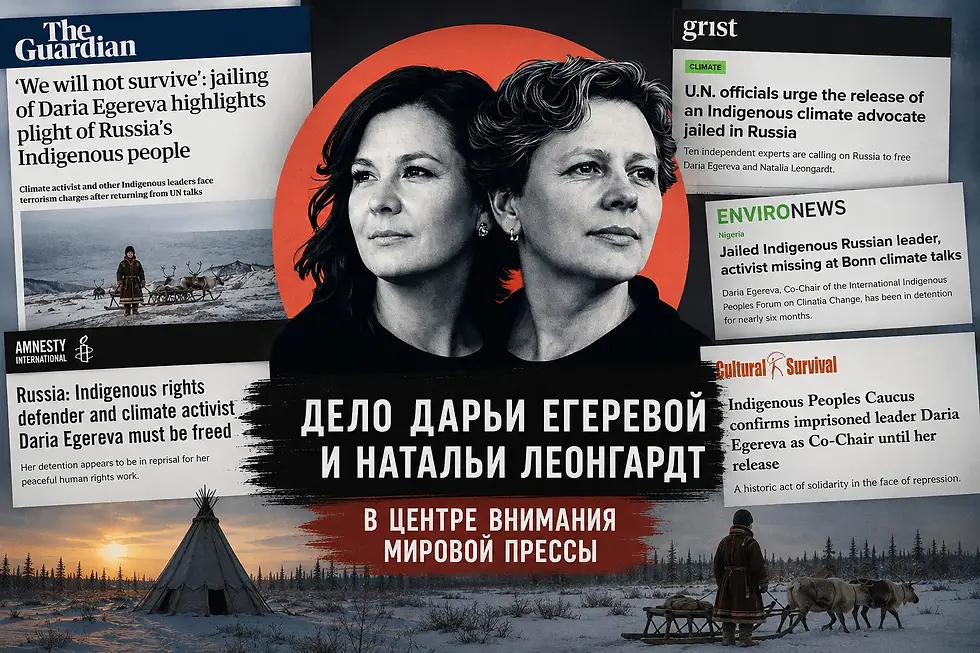
Currently, Indigenous activists Daria Egereva and Natalia Leongardt remain in custody, charged with terrorism-related offenses. International organizations and UN experts have repeatedly called on Russian authorities to cease the persecution of human rights defenders and ensure the respect of their rights.
The Russian Foreign Ministry's statement appears to be a classic case of seeing "the speck in your neighbor's eye but not noticing the log in your own." No one denies the heavy colonial legacy of Canada, the United States, the Scandinavian countries, Australia, or New Zealand. Moreover, these very states acknowledge many historical crimes, establish truth and reconciliation commissions, pay compensation, return lands, and expand Indigenous participation in decision-making. These processes are far from complete and are often criticized by Indigenous peoples themselves.
In Russia, however, official rhetoric about the protection of Indigenous rights coexists with the persecution of independent leaders and organizations. The state regularly declares its support for traditional ways of life, while simultaneously restricting the activities of those Indigenous representatives who speak publicly about problems related to natural resource extraction, violations of land rights, or who turn to international human rights mechanisms for protection.
Consequently, attempts to portray international criticism exclusively as "Western false narratives" appear unconvincing. Instead of seeking external enemies, Russian authorities would do well to answer questions about the situation of their own citizens, including Indigenous representatives, whose rights and freedoms are causing growing international concern.


Comments