“Defending Indigenous Rights Is Not Terrorism”


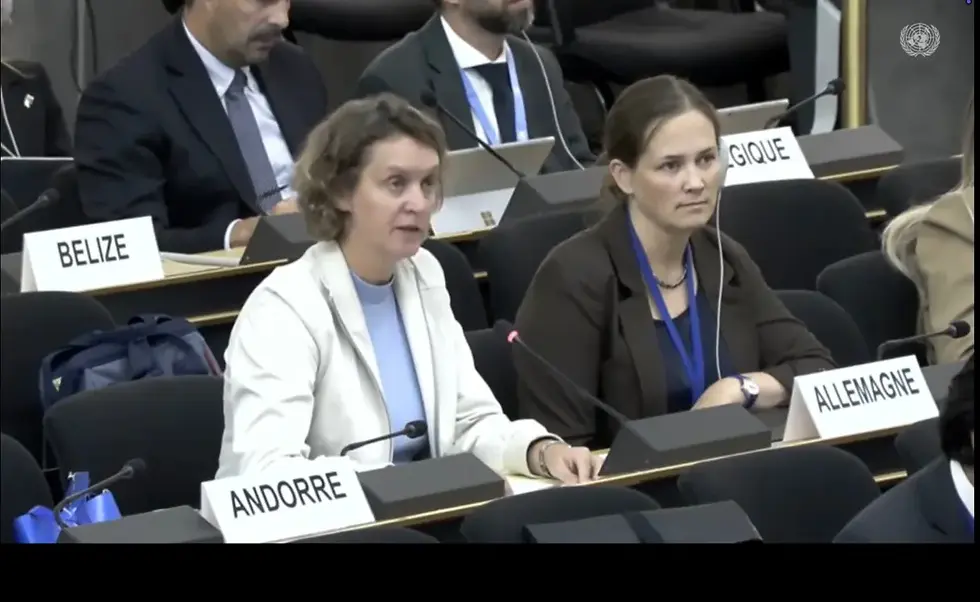
On September 24, Yana Tannagasheva, a representative of the International Committee of Indigenous Peoples of Russia (ICIPR), addressed the 63rd session of the UN Human Rights Council in Geneva. Her statement was delivered during an interactive dialogue with the UN Expert Mechanism on the Rights of Indigenous Peoples (EMRIP) under agenda items 3 and 5.
The main focus of her statement was the connection between historical injustice against Indigenous Peoples in Russia and the contemporary pressure faced by Indigenous rights defenders.
“Historical injustice against Indigenous Peoples in Russia is not only a matter of the past. Its consequences continue to be felt today,” Tannagasheva said.
She recalled that for generations, Indigenous Peoples in Russia have faced assimilation, the loss of languages and cultures, dispossession of traditional lands, and the destruction of territories in the interests of economic development.
According to Tannagasheva, these problems are now compounded by direct pressure on Indigenous leaders and human rights defenders.
Particular attention in her statement was given to Daria Egereva and Natalia Leongardt, who remain in detention.
“In December 2025, Indigenous rights defenders Daria Egereva and Natalia Leongardt were arrested and charged with alleged participation in a so-called ‘terrorist organization’ for their peaceful human rights work. They remain in pre-trial detention and face up to twenty years in prison,” the ICIPR representative said.
On September 10, the Basmanny District Court in Moscow once again extended Egereva and Leongardt’s pre-trial detention, this time until December 9, 2026. Both are charged under Part 2 of Article 205.5 of the Russian Criminal Code — participation in the activities of an organization designated as terrorist.
Tannagasheva stressed that ICIPR views their prosecution as a signal to Russia’s entire independent Indigenous movement: “do not speak out, do not organize, and do not defend your rights.”
She called on the UN Human Rights Council to treat the criminalization and reprisals against Indigenous rights defenders as a threat to collective rights, self-determination, and the very survival of Indigenous Peoples, and demanded the immediate release of Egereva and Leongardt.
Her second appeal was directed at international protection mechanisms. Tannagasheva proposed strengthening monitoring of the situation of Indigenous rights defenders, particularly those defending traditional lands and natural resources or engaging with UN mechanisms.
The issue is already on the United Nations’ radar. In April 2026, ten UN Special Procedures mandate holders sent a joint communication to the Russian authorities concerning the cases of Egereva and Leongardt. The experts expressed serious concern about their detention and prosecution and, in Daria Egereva’s case, specifically noted that the information received indicated possible acts of intimidation and reprisals in response to her engagement with the UN, its representatives, and human rights mechanisms.
Yana Tannagasheva herself has previously been featured in UN materials concerning reprisals for cooperation with international human rights mechanisms. In the #EndReprisals campaign database, her cases are linked to her engagement with the UN Committee on the Elimination of Racial Discrimination and the UN Expert Mechanism on the Rights of Indigenous Peoples.
Tannagasheva concluded her statement in Geneva with three brief messages:
“Defending Indigenous rights is not terrorism. Cooperation with the UN is not a crime. Historical injustice must not become the injustice of tomorrow.”


Comments