UN Special Rapporteur Mentions Daria Egereva's Case While Speaking About Criminalization of Indigenous Leaders


On July 15, during the 19th session of the UN Expert Mechanism on the Rights of Indigenous Peoples (EMRIP) in Geneva, an interactive dialogue took place under agenda item 5, dedicated to the implementation of the UN Declaration on the Rights of Indigenous Peoples. The discussion was attended by UN Special Rapporteur on the Rights of Indigenous Peoples Albert Kwokwo Barume, representatives of the UN Permanent Forum on Indigenous Issues, the UN Voluntary Fund for Indigenous Peoples, and UN treaty bodies.
Presenting an overview of the most serious violations of Indigenous rights, Special Rapporteur Albert Kwokwo Barume stated that the situation of Indigenous human rights defenders continues to deteriorate in many countries around the world. Among the most alarming trends, he named the increasing criminalization of Indigenous leaders defending the rights of their communities, murders, arbitrary detentions, prolonged pretrial detention, intimidation, and persecution for cooperation with international human rights mechanisms.
In his address, the Special Rapporteur also mentioned the case of Russian activist Daria
Egereva, emphasizing the inadmissibility of using criminal prosecution and other repressive measures against Indigenous representatives for their peaceful human rights work and cooperation with UN mechanisms.
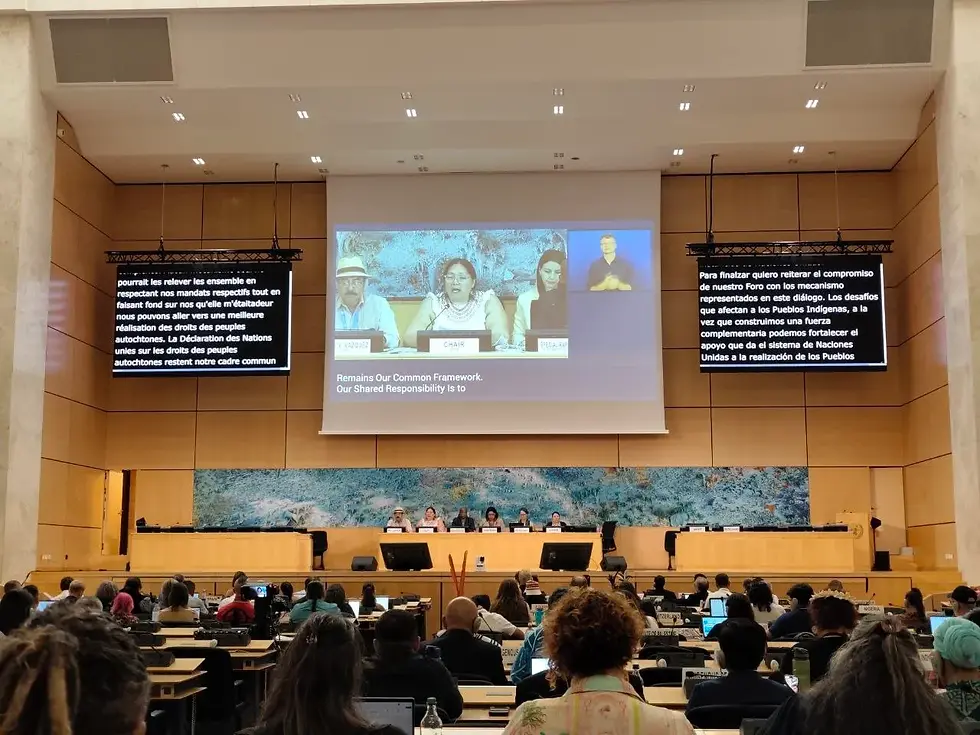
A similar position was expressed by Auluqi Kotierk, Chair of the UN Permanent Forum on Indigenous Issues. She emphasized that Indigenous leaders and human rights defenders must not be subjected to persecution, intimidation, or punishment for defending the rights of their peoples and engaging with UN mechanisms. According to her, ensuring the safe and free participation of Indigenous representatives is a necessary condition for the implementation of the UN Declaration on the Rights of Indigenous Peoples.
The protection of Indigenous human rights defenders has become one of the key themes of the current EMRIP session. Over the course of several days, independent Indigenous representatives from various countries repeatedly raised the issue of repression, criminal prosecution, and restrictions on Indigenous participation in international processes, calling on UN bodies to strengthen their attention to these violations and to work for the effective protection of those who defend the rights of their peoples.


Comments