New Report: The "Aborigen Forum" Case Cited as an Example of the Political Application of Russia's "Terrorist and Extremist" List

Updated: Jul 23

The Anti-War Committee of Russia has published an analytical report, "Russia's List of Terrorists and Extremists: Political Designations, Compliance Risks, and Cross-Border Effects," examining the use of the Russian list of terrorists and extremists maintained by Rosfinmonitoring. The authors conclude that this mechanism is increasingly applied not only to combat terrorism but also against political opponents, human rights defenders, journalists, religious groups, and civil activists.
According to the research, the Rosfinmonitoring list contains over 21,500 individuals, of whom at least 5,063 are linked to cases that human rights organizations consider to be politically motivated. Following the full-scale invasion of Ukraine, the proportion of such inclusions has grown significantly: while before 2022 they accounted for about 9% of new entries, by 2024 that figure had reached at least 41%.
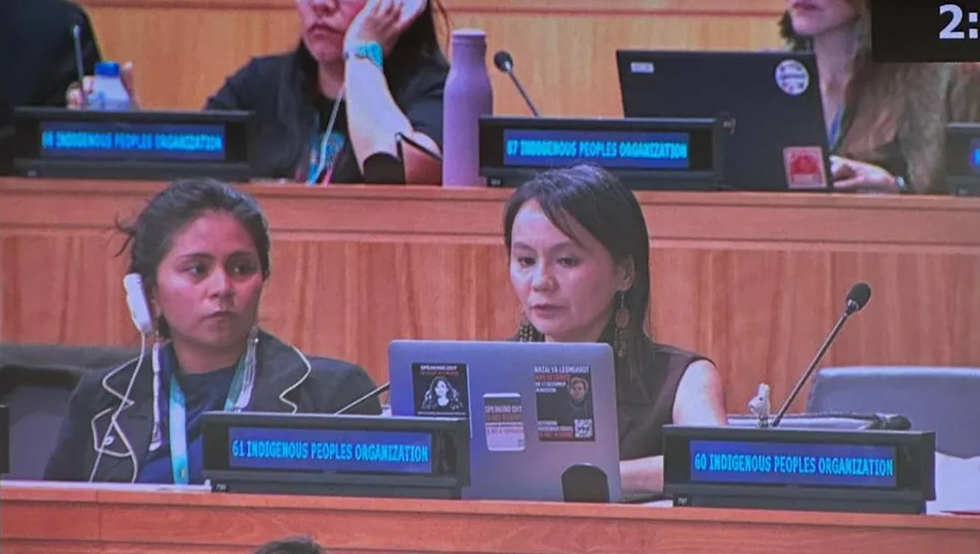
A dedicated section of the report addresses the persecution of Indigenous peoples. As a key example, the authors examine the case of the "Aborigen Forum"—an independent network of activists and experts advocating for the rights of Indigenous small-numbered peoples. After the network was first designated "extremist" and later "terrorist," Russian authorities initiated criminal cases against several of its members.
The report mentions the cases of Daria Egereva—a Selkup human rights defender and co-chair of the International Indigenous Peoples Forum on Climate Change—and Natalia Leongardt. Both are charged with participation in a "terrorist organization" due to their alleged ties to the "Aborigen Forum." The report's authors view these criminal cases as examples of the application of anti-terrorism legislation against peaceful human rights activities.
The study also draws attention to the international consequences of the Russian list. In the authors' view, inclusion on the Rosfinmonitoring list creates serious risks for international financial transactions, banking services, humanitarian activities, and cross-border cooperation, even when the charges do not meet international standards for defining terrorism and extremism.


Comments