Dispute Over Indigenous Representation at COP17: Why the Case of Daria Egereva and Natalia Leongardt Matters

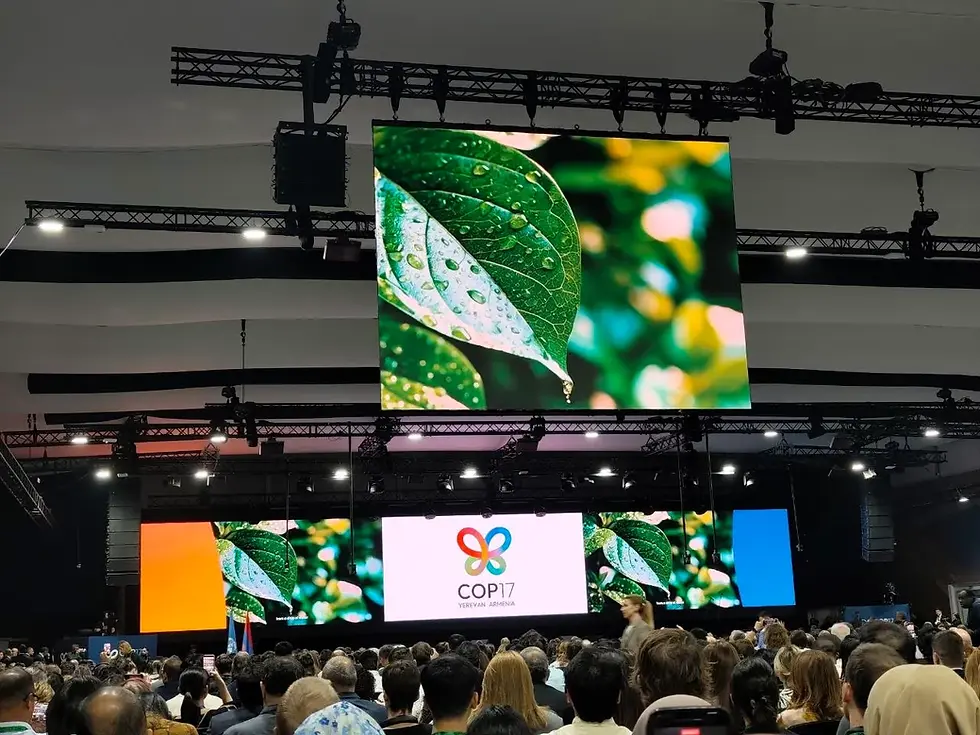
At the 17th Conference of the Parties to the UN Convention on Biological Diversity (COP17), currently taking place in Yerevan, Armenia, a dispute has emerged over the principles of Indigenous Peoples’ representation in international processes.
According to Indigenous Russia, the Russian delegation has opposed extending the system of seven Indigenous sociocultural regions to all mechanisms under the Convention.
Behind this seemingly procedural issue lies a much deeper question: Who should determine who represents Indigenous Peoples — governments or Indigenous Peoples themselves, through their own institutions and decision-making processes?
Russia has argued against extending the seven-region model, favoring an approach based on the five UN regional groups used for intergovernmental representation. The International Indigenous Forum on Biodiversity (IIFB), meanwhile, supports the established system of seven Indigenous sociocultural regions, which reflects historical, cultural, and cross-border connections and enables Indigenous Peoples to organize their own representation.
The Russian government justifies its objections by citing the need to protect the interests of 17 Indigenous Peoples living in the Russian Arctic. However, as Indigenous Russia reports, independent Indigenous representatives from Russia oppose abandoning the seven-region system, emphasizing the fundamental importance of Indigenous Peoples’ right to select their own representatives.
How Does This Relate to Daria and Natalia?
The debate at COP17 takes on particular significance in light of the criminal prosecution of Daria Egereva and Natalia Leongardt, who have been held in pre-trial detention in Moscow since December 2025.
Both human rights defenders spent many years working to strengthen the participation of Indigenous Peoples from Russia in international processes.
Daria Egereva, a member of the Selkup Indigenous People and Co-Chair of the International Indigenous Peoples’ Forum on Climate Change (IIPFCC), helped coordinate Indigenous participation in UN climate negotiations and contributed to processes under the Convention on Biological Diversity.
Natalia Leongardt supported Indigenous representatives in accessing international meetings, providing organizational assistance, facilitating cooperation with international institutions, and helping create opportunities for independent representation.
Their work was directly connected to strengthening the very mechanisms of Indigenous participation whose future is now being debated at COP17.
Yet both women face charges of participation in a terrorist organization in connection with the so-called Aborigen Forum case. They could face up to 20 years in prison.
International human rights organizations have called for their release, viewing their prosecution in the broader context of restrictions on peaceful human rights activities.
This reveals a fundamental contradiction: while the Russian delegation speaks about ensuring fair representation of Indigenous Peoples in international forums, two human rights defenders who spent years facilitating such participation remain behind bars.
Representation Is About More Than the Number of Seats
The Indigenous Russia article also highlights another important detail. A 16-member delegation from the Russian Association of Indigenous Peoples of the North, Siberia and the Far East (RAIPON) is attending COP17, led by its president, Alexander Novyukhov, who is also a member of the Russian Federation Council.
The participation of the official association does not, in itself, resolve the question of whether the full diversity of Indigenous perspectives from Russia is represented at the conference.
The case of Daria Egereva and Natalia Leongardt illustrates why international mechanisms must consider not only the presence of Indigenous delegates but also whether independent organizations and activists can participate freely in discussions and decision-making.
This is particularly important when negotiations concern traditional territories, biodiversity conservation, natural resource management, and the distribution of international funding.
The central question is not simply how many Indigenous representatives attend an international conference, but whether Indigenous Peoples themselves can freely decide who speaks on their behalf.
In Yerevan, this question is being debated in the absence of Daria Egereva and Natalia Leongardt. Their case adds a crucial human rights dimension to what might otherwise appear to be a procedural disagreement over international representation.



Comments